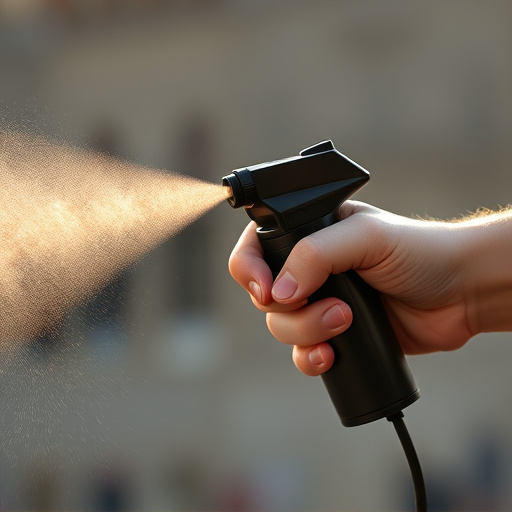
Effective use of oleoresin capsicum (OC) spray relies on Tactical Communication During Spray Deployment. Clear communication through standardized phrases and dedicated channels ensures swift understanding and coordinated action during deployment, aiding de-escalation efforts and minimizing collateral damage. Training emphasizes responsible usage, clear intent conveyance, and adherence to safety protocols through regular practice scenarios and refresher courses.
“Discover the power of self-defense with an innovative tool—Oleoresin Capsicum (OC) spray. This article explores its mechanics, offering insights into how this pepper spray works to neutralize threats. We delve into effective tactical communication strategies during deployment, ensuring users can convey urgency clearly. Additionally, safety measures and user training techniques are discussed to promote responsible usage. Learn how proper training and communication enhance the OC spray’s effectiveness as a personal defense mechanism.”
- Understanding Oleoresin Capsicum Spray Mechanics
- Effective Tactical Communication Strategies
- Safety Measures and User Training Techniques
Understanding Oleoresin Capsicum Spray Mechanics
Oleoresin capsicum (OC) spray, often referred to as pepper spray, operates by targeting the body’s nervous system. When deployed, the OC particles suspend in the air and are inhaled or come into direct contact with the eyes and skin. This irritates nerve endings, causing a powerful inflammatory response that leads to temporary blindness, increased heart rate, coughing, and difficulty breathing. The mechanism ensures a non-lethal but effective means of self-defense, providing users with tactical communication during spray deployment by signaling potential threats without resorting to lethal force.
Effective use requires understanding the spray’s range, wind conditions, and targeting techniques. Users must be trained in tactical communication to instruct others to drop to the ground, cover their eyes and face, and remain still until the effects subside. This clear and concise communication can help de-escalate situations, minimize collateral damage, and ensure the safety of both the user and any bystanders.
Effective Tactical Communication Strategies
When using oleoresin capsicum (OC) spray as a defense tool, clear and effective tactical communication becomes even more critical. During OC spray deployment, swift and accurate communication ensures that all team members understand the situation, the level of threat, and the necessary response. This includes coordinating de-escalation efforts with the target individual while simultaneously managing nearby bystanders to maintain safety and reduce confusion.
Tactical communicators should employ concise yet comprehensive language to convey critical information. For instance, using standardized phrases like “OC spray deployed” or “activate de-escalation protocol” ensures everyone is on the same page. Additionally, establishing a dedicated channel for tactical updates facilitates real-time decision-making and enhances overall operational efficiency. Effective communication not only streamlines response strategies but also mitigates potential legal implications by providing clear evidence of proportional force application through recorded radio transmissions or body-worn cameras.
Safety Measures and User Training Techniques
Using oleoresin capsicum spray as a defense tool comes with specific safety measures and user training requirements. When deploying the spray, tactical communication during spray deployment is crucial. Users must be trained to clearly convey their intentions and alert others in the vicinity, ensuring everyone understands the situation to minimize panic and potential bystanders’ harm.
Proper training involves learning safe handling procedures, including how to activate the spray while maintaining control. Practice scenarios help users become proficient in tactical communication, enabling them to effectively manage situations without escalating tension. Regular refresher courses are essential to reinforce safety protocols and user confidence in their ability to deploy the spray responsibly.
Oleoresin capsicum (OC) spray, a powerful defense tool, requires a combination of understanding its mechanics, implementing effective tactical communication during spray deployment, and adhering to strict safety measures. By mastering these key aspects—from the science behind OC spray to strategic communication techniques and comprehensive user training—individuals can ensure their safety and effectively deter potential threats in various scenarios.