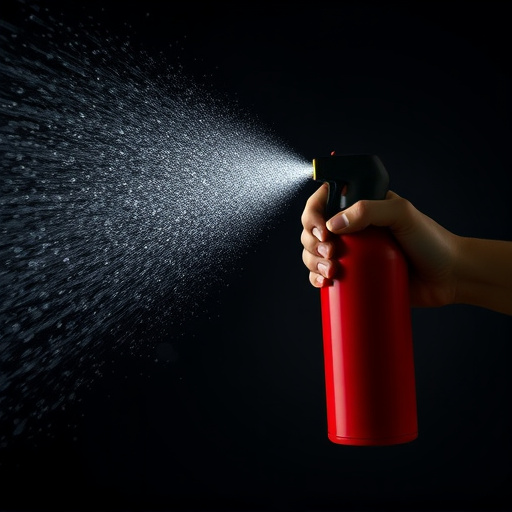
Capsaicin, a natural defense in chili peppers, acts as a non-lethal deterrent by irritating sensory systems. Effective use requires understanding capsaicin's effects and tactical communication during spray deployment to ensure maximum impact while minimizing user exposure. Compact personal protection devices featuring precise capsaicin spray mechanisms enhance safety and coordination in high-pressure situations like law enforcement operations, with positive user feedback citing ease of access and a sense of security. Regular training on tactical communication and usage ensures optimal effectiveness.
Introducing the revolutionary personal protection device powered by capsaicin, a natural compound known for its potent heat-inducing properties. This innovative solution offers a non-lethal way to deter threats, focusing on safety and effectiveness. In this article, we explore key aspects such as understanding capsaicin’s active ingredient, the crucial role of tactical communication during spray deployment, device design, safety measures, and user experience. Get ready to discover how this cutting-edge technology redefines personal security.
- Understanding Capsaicin: The Active Ingredient
- Tactical Communication: Why It Matters
- Device Design and Deployment Mechanism
- Safety Measures and User Experience
Understanding Capsaicin: The Active Ingredient
Capsaicin, the active ingredient in chili peppers, serves as a powerful natural defense mechanism. This compound is responsible for the pungent heat sensation often associated with spicy foods and certain self-defense sprays. When deployed, capsaicin irritates the eyes, nose, and respiratory system of a potential attacker, temporarily impairing their vision and breathing. This tactical advantage makes it an effective ingredient in personal protection devices.
Understanding how capsaicin interacts with the body’s sensory systems is crucial for optimizing its use in self-defense scenarios. During spray deployment, tactical communication becomes essential—instructing users on proper application techniques ensures maximum effectiveness. By leveraging the power of capsaicin, individuals can gain valuable time to escape or seek assistance, making it a game-changer in personal safety strategies.
Tactical Communication: Why It Matters
In the heat of a dangerous situation, effective tactical communication can be the difference between safety and harm. When deploying a capsaicin-based personal protection device, clear and concise communication is vital. During spray deployment, split seconds count, and users need to convey critical information to their team or emergency services promptly. Tactical communication ensures everyone involved understands the nature of the threat, enabling quicker response times and better coordination.
This becomes especially crucial in high-pressure environments like law enforcement operations, where clear signals can prevent escalation and ensure the safety of both citizens and officers. Effective tactical communication during spray deployment allows for precise de-escalation strategies, coordinating retreat or backup, and promptly reporting on the situation’s dynamics, ultimately enhancing overall operational efficiency and effectiveness.
Device Design and Deployment Mechanism
The design of a capsaicin-based personal protection device is a delicate balance between effectiveness and user safety. These devices typically consist of a compact, easily portable spray container, equipped with a precise mechanism to deliver a powerful capsaicin solution. The deployment system is crucial, ensuring a controlled release of the chemical agent while allowing for tactical communication during emergency situations.
The deployment mechanism often involves a simple yet robust trigger system, designed to be activated by the user when threatened. This trigger initiates a measured spray discharge, enabling individuals to create a temporary barrier or deter an attacker. Effective tactical communication becomes integral during this process, as users can discreetly alert nearby allies or emergency services of their location and distress, ensuring swift assistance in potentially life-threatening scenarios.
Safety Measures and User Experience
In terms of safety measures, a capsaicin-based personal protection device (PPD) is designed with user well-being as a top priority. Unlike traditional pepper spray, which can cause severe respiratory distress and blindness, capsaicin PPDs offer a more targeted and controlled approach to self-defense. These devices typically deploy a fine mist of capsaicin oil, ensuring minimal exposure to the user while maximizing impact on the assailant. Tactical communication during spray deployment is crucial; clear instructions and warnings should be provided to users, emphasizing the non-lethal nature of the spray and necessary safety precautions.
The user experience with capsaicin PPDs is generally positive, offering a sense of empowerment and enhanced personal security. The devices are often compact and easily accessible, allowing for quick deployment in high-risk situations. Users appreciate the precision of the spray pattern, which enables them to protect themselves without endangering bystanders. Regular training and practice sessions can further enhance the user’s understanding of tactical communication and proper usage, ensuring optimal effectiveness during critical moments.
A capsaicin-based personal protection device offers a revolutionary approach to self-defense, leveraging the power of this natural ingredient. By integrating tactical communication during spray deployment, users can enhance their safety and ensure swift response in threatening situations. Through careful design and consideration of user experience, these devices provide an effective, non-lethal solution while prioritizing safety measures. This innovative technology not only deters potential attackers but also empowers individuals to navigate dangerous environments with newfound confidence.